Grandma Magic Podcast Episode 33: Barbara Shaiman, Empowering Thousands to Advocate for Social Justice
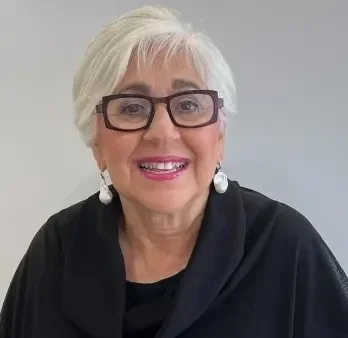
Barbara Shaiman is a renowned educator, businesswoman, and social entrepreneur whose family history instilled a lifelong sense of responsibility to make the world better by being kind, standing up, and speaking out. In this episode, we learn about Barbara’s upbringing as the daughter of Holocaust survivors, and how this shaped her diverse career chasing her “technicolor dreams.” As a grandmother changemaker, she carries forward a legacy of action and empathy, grounded in the belief that everyone — regardless of age or background — has the power to make a difference. Barbara shares how her greatest strength lies in knowing her limitations and building diverse, intergenerational teams to bridge them. Her work through Champions of Caring brings together people across the country to recognize and empower children as social activists. Collaborating with psychologists, academics, and even film-makers, she’s exploring the measurable impact of empathy-driven activism — and inviting others to join her. Barbara reminds us that “Everyone can be great,”, echoing Martin Luther King Jr., “because everyone can serve.” This episode is a call to action — for young and old alike — to transform pain into possibility, and to find joy, meaning, and connection in the work of building a better world.
Transcript
Lynsey Farrell (Host): Welcome to Grandma Magic, a podcast from the Grandmother Collective. We are a nonprofit organization that supports and advocates for a world where grandmother’s power is seen, cultivated, and activated for positive change. The Grandma Magic Podcast is an opportunity to learn more about the unique roles that grandmothers, aunties, and other older women around the world can play in advancing positive social development by talking to and learning from grandmother change makers. We hope this series inspires you, brings you joy, and helps you recognize the enduring magic and wisdom that comes from grandmothers everywhere. My name is Lynsey Farrell, and I’m your host.
Today I’m honored to welcome Barbara Shaiman, a powerhouse educator, businesswoman, and social entrepreneur whose life work has been about turning pain into purpose and legacy into action. Barbara is the daughter of Holocaust survivors, a history that profoundly shaped her path and instilled a lifelong sense of responsibility to make the world better. In 1995, she founded Champions of Caring, a nonprofit that has empowered over 10,000 youth in Philadelphia and South Africa to become leaders in public service. She has spent more than three decades guiding people of all ages to find their voice, their purpose, and their place in the work of social change. Her latest venture, Embrace Your Legacy, invites adults to live intentionally and leave behind more than memories. It encourages impact. Barbara is the author of Live Your Legacy Now, 10 Simple Steps to Find Your Passion and Change the World, and a follow-up workbook that helps people of all ages put that passion into practice. She believes that every one of us can make a difference, and she’s lived that belief every day from classrooms to boardrooms she inspires, mobilizes, and uplifts with the message that changing the world starts with changing one life at a time. So let’s welcome Barbara to Grandma Magic.
Well I’m so excited to have you here with us today, Barbara, and one of the questions that I really love to start with is to try to understand, you know, as you’re aging, we’re all aging, but as you’re aging, what are some things that you are really hoping are legacies or traditions or things that you want to pass down to the next generation?
Barbara Shaiman: Well, I think it’s very important for me to teach my own family, my grandchildren, my children, my stepchildren, and the thousands of young people that I’ve worked with over the years to stand up and to speak out. We live in very tumultuous, difficult times, and many people feel, “I’m just one person, what can I do about this?”
And I want them to understand that every person can create social justice, can create change. And I think that knowing that you can stand up and speak out, that every little bit helps. My mother used to always say to me, a head without a heart is dangerous. Lead from your heart. Look at what’s going on around you.
What resonates for you? What do you really care about? And start thinking about what are things you can do to address this issue? Who can you involve? I’ve never been able to do things alone. I learned very early on that you need a good team, a bunch of committed, kind, caring people with different kinds of skill sets who can empower the team to create social change. I know that for me, I’ve become a huge proponent of intergenerational collaboration. I know my strengths and I know my weaknesses and some of my weaknesses are around social media or more contemporary technology skills. So I know when I surround myself with college students, that’s taken care of. You know, we’ve been very lucky. We’re making a documentary right now called the Coral Ring Legacy, and we have an Instagram account. And thanks to college students at Temple, I have had 5 million views. I would’ve never known how to do this. So I’m very grateful because I have a vision, but I don’t know how to take each piece of that vision and really put it out there in the most effective way.
So, you know, find people with skills that support what you’re trying to do that are different from yours. Be open to new ideas and new suggestions. I love working with people of all generations because I think we need to learn to value what everyone brings to the table. And I’ve been bringing from 10 year olds to 90 year olds together. I just love that sometimes the best idea comes from the 10 year olds. Sometimes it’s the 90 year olds, sometimes it’s the 23 year olds. But when you put them all together, it’s such a rich collection of thinkers who have great ideas, and it takes the work that I would’ve wanted to do alone and expands it on so many levels.
Lynsey Farrell (Host): Alright, so you’ve mentioned, your organization, Champions of Caring tell us a little bit about the organization and some of the influences of starting that.
Barbara Shaiman: Well, let me tell you why I started Champions of Caring. I was raised by three Holocaust survivors. My mother, who was a sole survivor of a family of 65 people. My paternal grandmother. My father’s mother and I actually shared a room with her till I was 19 and got married and lived with my husband, which when I think about that today, blows my mind. And my father, who had originally worked for Oscar Schindler, but unfortunately was not put on that famous list, and instead was put on the death march. Growing up, I learned from them that even though they were living in the most heinous times imaginable, where a madman named Hitler came to power and decided that certain people weren’t supposed to be alive, that they should be eliminated, and they were Jews and they were gypsies, and they were people with disabilities and they were gays and homosexual. He saw no need for these people. And in spite of the horrors that my own family went through, I share the story about my grandmother being sent to Auschwitz and finding these berries that grew on the ground, and when she crushed them, they made a rouge like substance. Every morning there was something called Appell. It was the lineup so that they could see the Nazis, could see who had lived, and they would call them not by their names, but rather by their numbers, because part of the process was to dehumanize the person. My grandmother would get up an hour before this four o’clock roll call and crush these berries and start rouging the cheeks of the most frail elderly women so that they could live yet another day.
My father was working for Oscar Schindler, but unfortunately was not on the list, and instead was sent on the death march. He carried his cousin Henry, who had typhus, in the snow in these horrific conditions because if he hadn’t carried him, Henry would’ve fallen in the snow and died. My mother was sent to the Lodz Ghetto (Poland) when she was 15 years old, and she always used to tell me how there were these orphans, little kids, 3, 4, 5, 6, 8 year olds running around aimlessly. Their parents had either been deported, were dying of typhus, or were already dead. My mother collected these children together every day, and they would sing songs and they would make up games. She would just love them and you know, nurture them, because she said to me, even in the Lodz Ghetto, I had to be a mensch, a kind good person. And what really touches me so much, Lindsay, is my mother died 15 years of dementia. One of the last things she said to me, and I could cry as I say too, you know, I know I’m dying, but if I die, who will take care of the children?
And I knew she was referencing the children in the Lodz Ghetto. And I looked at her and I said, don’t worry, mom, I will always take care of the children. And she gave me the biggest hug. So these stories, that even under the most heinous, horrific inhumane conditions, my parents and grandmother were still good kind people. So I learned that even under the worst of times, you have to find the goodness in your heart. Viktor Frankl in his book, Man’s Search for Meaning, talked about, you can’t control what happens to you, but you can control how you respond to it. And that’s how I was raised by my family, that it’s important to be kind, to stand up, to speak out.
And I’ll share with you one story that really changed my life forever and really opened up a new vista for me to explore. In 1989, my mother decided we should all go back to Poland. She wanted to tell the story that she and my father should tell my brother and myself the story of what happened. When a world stands by silent and indifferent and a hater of people, a dictator, a horrific human like Hitler comes to power. So we went to Poland and my mother used to compulsively brush her teeth. 4, 5, 6 times a day, it would drive us crazy and we would actually almost, you know, ridicule her. Oh, come on, mom, brushing your teeth again. What’s the issue here?
Well, we get to Poland, to Auschwitz, Lindsay, and we’re standing under the sign Arbeit Macht Frei (Work Will Set You Free), which was a sign when you enter Auschwitz. So my mother looks at me and says I was 16 years old. I had lost everyone and everything, but I snuck a toothbrush into my dress. I didn’t have clean water or any water. I didn’t have toothpaste, but the feel of the bristles on my teeth made me feel human. It was the last vestige of my humanity. Well, I had such a visceral reaction to this. I had never heard this story before and I felt such shame and guilt that I used to make fun of her for brushing her teeth. So I ran into the courtyard and there were a group of German teenage boys, 14, 15, and 16 year olds laughing and clowning around and I was so shaken up and so upset, and I went over to them because German is my first language, I was born in Germany and I said to them, do you understand where you are? How can you behave like this? And they kept laughing and bam, my life changed forever. I thought to myself, I need to go back to Philadelphia and I need to start an organization. To promote social justice, to teach young people to stand up and speak out and create projects to address needs in the world that they care about, to honor and celebrate them.
I thought, why do we honor straight A students, great athletes, great musicians, but what about the kids with the great hearts who feed the homeless, who go to shelters? We don’t make enough of a fuss about them. So the name Champions of Caring popped into my head and I thought, let’s make those young people the heroes of our time. And my whole world turned around because of this toothbrush story standing in Auschwitz and really reflecting on what can I do in my own way to create a kinder world? And I have some interesting stories about what happened. I came back to Philadelphia and my best friend’s husband, Robert Wright at the time was the CEO of NBC Universal, and he and his wife called to see how the trip was. They knew me very well and they knew my parents. And when I told them about Champions of Caring, they said that NBC would help support it. And then he said, and I’m meeting with Steven Spielberg. He’s making this film called Schindler’s List, and if you could pull it out, what you’re trying to do with this organization, I will share that with him.
And, it was a gift that Spielberg gave us seed money from his Righteous Persons Foundation. And that’s how we started Champions of Caring in 1995. And it was all about the toothbrush story, understanding what it meant to my mom. And realizing that we need to teach these skills to young people so that they can be part of a movement to create a kinder better world.
Lynsey Farrell (Host): What were you doing before you went on that trip?
Barbara Shaiman: I had a national firm recruiting senior level healthcare executives and doctors. And Lynsey, I have to tell you, I went to college in the sixties and nobody was telling women they had a lot of options. I was basically told I could be a teacher, a nurse, a secretary, or stay home. And so for me to have gotten to a point where I could have my own firm and do this kind of work, I was elated. I loved the work. But in Auschwitz, everything changed for me. The work was still important that I was doing, but it wasn’t what was touching my soul. So, you know, when I came back to Philly, I have to share with you that when I told friends and colleagues I was giving up my practice and doing this, they thought I was crazy.
They said, uh oh, something’s wrong with her. They didn’t understand initially why this was speaking to my heart and why I felt that being a social activist was the most important thing I could do given what I had just experienced in Auschwitz and what had happened to my family and millions of others.
Lynsey Farrell (Host): You know what? I find it so interesting because there must have been something in you from a very young age, obviously you have a foundation of a family of changemakers like, in the face of challenges, they find a way. But your first career, even to, develop into, trailblazing or pushing the envelope or this, that you didn’t become a secretary, a nurse or a teacher.
Barbara Shaiman: Well, I did become a teacher.
Lynsey Farrell (Host): Oh, you did? That was the first career. Was that the first career? Okay.
Barbara Shaiman: That was the first career. I went to Hunter College in New York and I did my student teaching in the Bronx. Then I moved to Daytona Beach, Florida, and I was the only white teacher in an all black school, and I loved that job. And I did stay with teaching for quite a while and then got involved in the executive search business.
Lynsey Farrell (Host): Wow. Okay. but it seems like you were destined to just keep pushing at things and, and finding a way.
Barbara Shaiman: I find that I need to be challenged. my generation was taught sort of that you get a job, you work for a company, you retire, you get the gold pen, and that’s your career and the jobs or the careers I had filled me with great joy. But when something new came along that was more interesting or exciting, I needed to move on. And even now I’m making a documentary with an Emmy award-winning filmmaker. I didn’t know anything about this. It’s almost comical how for two years I was walking around saying, do you know a filmmaker? I need to make a documentary. I want to inspire people of all ages to create social change.
And people were sort of laughing, going, there she goes again. I’m pleased to tell you that we’ve shot 80 hours of this documentary. Here’s what I know. If you’re passionate about something and you can find the right people to support you, miracles can happen. My greatest strength is knowing my limitations. I know what I’m good at and I know what I’m not good at. And then I try to find people of all ages and backgrounds who can supplement what I’m missing. And I think instead of being afraid of a task that it’s too large, it’s too overwhelming, I wouldn’t know how to do this, break it into pieces. What are the skills that I bring to the table? What other skills do we need to be impactful with this project. So I’m a risk taker because my mother said to me, never dream in black and white. It’s too boring. Always dream in technicolor. So I have spent my life dreaming in technicolor and being open to the universe.
When something comes along like that experience in Auschwitz or like making this movie about intergenerational social activism, I feel a pull. And when I’m with people that share my passion and bring the skill sets that we need, I’m in heaven and I’m 77 Lindsey, but I still have the same energy, I think, and passion and desire to do good work and be a role model for my children, and grandchildren.
Lynsey Farrell (Host): So champions of caring is 30 years old?
Barbara Shaiman: Yes. It started in 1995.
Lynsey Farrell (Host): Yeah. So what are your successes? What is Champions of Caring doing in the world?
Barbara Shaiman: Well, Champions of Caring went through different iterations. It started off when I came back from Europe that I wanted to honor young people, who were doing incredible work, and I went to the Archdiocesan schools. I went to the Philadelphia public schools, to the private schools, and we created a booklet with an essay where students had to write about what they were doing, what it meant to them, and what importance came out of that.
And then they needed two letters of reference. So we started simply as a recognition program. The mayor would come, the governor would come, the cardinal would come. We would have representation from different, ethnic communities, religious communities, and we held these events a lot, at the Union League initially, but then I got into a very wonderful relationship with Dr. Taki Papadakis, the president of Drexel. I met with him one day and told him that I needed space for our students to meet and to have awards as ceremonies, and he said to me, I’m your partner because my wife, Eliana’s family, hid Jews in Solanica, Greece. So I’m eternally grateful to Dr. Papadakis because Drexel became a very strong partner and we had our events in their main auditorium. We were able to use classrooms and faculty from Drexel and that really was terrific because one of my goals, and this was not happening at the time, Lindsey, I wanted to bring together inner city kids. kids from the main line, from private schools, black kids, white kids, all kinds of kids, because we were really very segregated.
If you lived on the main line, you would not meet someone from Kensington High School, And I just thought, wouldn’t it be wonderful if disparate groups of young people could come together and share their passion, their creativity, and their desire to create a better world? It would be such a rich experience for everyone. And having our meetings, this was for the second program, we started, as I mentioned, with a recognition program, and then we moved into something that I call the Ambassadors of Caring Leadership Program. This was for kids who had been honored as champions and who said, I want to do more. I want to really become a social entrepreneur. Can you teach me the skill sets? And they agreed to come monthly for four hours on a Sunday to Drexel to come to a retreat that we did overnight and to come to the United States Holocaust Memorial Museum and a trip to Washington for several days. And many of these kids stayed with me all through their high school career.
And they wanted to learn public speaking skills. They wanted to know how to make a budget. They wanted to know how to do a pitch, an elevator pitch to share their passion with someone. And we brought in community experts who helped them hone those skill sets. But the most beautiful thing for me was when kids would say to me, oh my God, I just met X. And he goes to Kensington and I go to Villa Maria. I would’ve never met him. Or I go to a friend’s school and I would’ve never met this person who lives in this other neighborhood in West Philly. And they became friends. They learned from each other and it changed their attitudes because they had never really mingled with kids that were so different from themselves.
And that was really very important to me. Now, the school district of Philadelphia came to me and said, can you teach this in classrooms? So we created the next phase of the program, the Classroom Program, and we trained principals and teachers and our service learning model. We created a curriculum and I visited the classrooms, and I love working with the kids and learning what they’re about, what they’re doing.
So we had those programs and then something very tragic happened to me. The most tragic thing that ever happened to me, my son died. His name was Dan Eisenbud and my son was a journalist for the Jerusalem Post living in Israel, and he had been writing articles about asylum seekers in Israel who were going to be deported.
And I was trying to think of what can I do in his memory? Kensington High School was a school where I had done a lot of work, so I approached Kensington High School to see if we could create a program called Dan’s Champions and if we could bring in support services. So we brought in La Puerta Abierto. The open door, which provided counseling service for some of these DACA kids and immigrants in Spanish.
We brought in Mark Vetri’s food truck, which he brought to the different schools to teach them how to cook healthy meals. We brought in Hebrew Immigrant Aid Society, which provided legal services to go to court and immigration services, and the Philly Pops gave us hundreds of tickets to the Christmas show at the Kimmel Center every year.
So this really touched my heart deeply and we were working with these kids and we partnered with Drexel, with their School of Social Entrepreneurship, and Drexel students came and helped the Kensington students create projects around issues that they cared about. So in my life, as things happened to me or as students came and requested things, we developed all these different kinds of programs and, it was just a joy to see this eclectic group of young people supporting each other, sharing ideas, learning from each other.
And it’s the greatest joy to see this ripple effect. People who would’ve never met each other in a million years, collaborating and trying to break down barriers and writing letters to the editor of the newspapers and to senators and congressmen, and doing advocacy work on behalf of their projects.
Lynsey Farrell (Host): Now, are these projects continuing or what does it look like today?
Barbara Shaiman: Well, COVID came.
Lynsey Farrell (Host): Yeah.
Barbara Shaiman: And that hurt us a lot. and then something happened to me in terms of my own thinking. We worked with 10,000 high school students in the greater Philadelphia area who gave 1 million hours of service locally, nationally, and globally. And I got involved at Temple University with intergenerational work.
And I have a passion for that. We worked with a professor her name is Tania Giovannetti. She’s in the psychology department, and we created a positive aging course that included college kids and seniors who ranged up to 95 years of age. And we were all invited to come to this class and it was on Zoom. It was during COVID and the relationships that were formed between the younger and older participants were extraordinary. And Tania did research. She did pre- and post-surveys to see, what have these young people and these older people learned about each other and about themselves in these intergenerational classes?
And it was beautiful. The comments ranged from, “I never had a relationship with someone that age,” and the age of that person they were with was 94. And the 94-year-old saying, “This added such joy to my life, especially during Covid.” And we have one person who’s 91 years old, we call her Elder Chick, Thelma Reese.
She has been talking to one of the students she met, for four years, once a week, and they’ve established this magnificent relationship. So, then the students actually said, oh, the course is over. What do we do now? So we created intergenerational cafes where a Temple student is partnered with a senior, and again, the age range of seniors could be from 50 to in the nineties.
And these have been going incredibly well. We are now in the process of exploring global interactions, meaning partnering with a university in another country and bringing together seniors and students from that college and seniors and students here from Temple and creating global cafes. So I’ve really learned so much about the power of intergenerational collaboration, and that’s a focus that we have right now.
And I think it’s just so important given the challenges we’re confronted with every single day. Bring all these mind trusts together to look at what do we care about and what can we bring our energy, our knowledge, our passion to. What are the issues that we care about? How can we create social change?
Lynsey Farrell (Host): You know, Barbara, as, as you’re talking, I just keep thinking like there’s a theme that you’re building bridges so often, right? That it’s the bridges between kids from different neighborhoods or communities or ethnic groups or religions, and now it’s the bridge that we have between ages. I mean, our society has been built in such a segregated way that, it seems like this is where you’re seeing the place where social impact can really shine.
Barbara Shaiman: Absolutely. And people should not be afraid of someone who’s different. You know, I used to be a little bit nervous. I don’t know you, I don’t know your background, but I’ve come to understand we’re all human. We all care. And it’s a wonderful thing to connect people. You know, Dr. Kimberly Goyette, who’s the head of the sociology department at Temple, did a longitudinal study for us before we decided to do the film.
I wanted to know — some of these kids that we started with in 1995 are now in their thirties and forties. How did our program impact them? And she created a questionnaire and we found one of the things that stood out was that almost all of them talked about never having had the opportunity to meet people that were different from them and how enriching that was in their lives.
And also that they had the power and the ability to create social change, that they didn’t know that and that it was something that’s within them. And you have to be brave and you know, adventurous, if you will, to say, yes, I can try to do this. And that they’re teaching this to their families, to their children, cousins and nieces, and that this has stayed with them as a way of life.
They’re huge advocates for social justice and they’re still very involved, and that really touched me so deeply because in 1995, I couldn’t begin to think of what would happen in 2025. Would there be impact? Would these young people care about this? Would they still be engaged in social justice? Would they be teaching it to their children, nieces, nephews? And I was thrilled, that Dr. Goyette did this study and it is published in a sociology journal and you need data. You need data. And this really filled my heart with great joy. We recently filmed at Kensington High School for the documentary, which is called, by the way, the Coral Ring Legacy.
It’s about a coral ring that my mother was given for her engagement and passed on to me for my 50th birthday. I wear it every day and every time I look at this ring, I remember my mother saying to me, “When you look at this ring, think about, were you kind today? Did you do something to help someone out?”
And it really propels me to be a social activist in the way I view the world. And I’ve told this story about the coral ring to thousands and thousands of young people. And I’ll never forget, I was once at a school, an all-boys Catholic school in New Jersey and I was doing a slideshow and the coral ring came on the slideshow and I said, let’s pass. because I thought, why would these boys care? And they said, no, no. Tell us the story. Do you know after I did my speech, 50 boys lined up and some of them wanted to kiss the ring. It never dawned on me that teenage high school boys would be interested in this and I just think that the coral ring is a reminder for me and every time I speak about, were you the best person today? Did you reach out? Did you call someone who’s homebound? Did you help someone out? It’s a trigger to really show up in the world as a kind, caring person. So I’m thrilled. You know, in the documentary we’re following eight of these young people. One is in Finland, and two of the others were in New Orleans and Washington DC in Philadelphia. So we’re showing how this has become a way of life for these young people.
Lynsey Farrell (Host): They all started in Philadelphia, but now are out in the world spreading what they learned during Champions of Caring.
Barbara Shaiman: They’re doctors, they’re lawyers, they’re in politics, but the one thing that they carry with them is being a Champion of Caring and continuing with that. And I can’t tell you the satisfaction that I have that so many years later. This is important to them and that they let us film them doing their social justice work. And that to me, it filled my heart. That the work that we did so many years ago is still going on and is going from one generation to the next.
Lynsey Farrell (Host): I’m realizing that I’m the same age as those kids that you were starting with in 1995. I was in high school in 1995. And the world of social change and our understanding of it and the support for young people to do social innovation and social entrepreneurship. It has evolved quite a lot. I don’t know if, were you part of the youth venture work that Ashoka was doing?
Barbara Shaiman: Ashoka was doing incredible work.
Lynsey Farrell (Host): Yeah, but there’s been a whole surge, changemakers as a word that we should be proud of and celebrate, and it seems like you were part of that journey. Do you have any reflections on the state of social change today and what direction it’s going to be heading in?
Barbara Shaiman: Well, for me, I hope it’s heading in the direction of intergenerational collaboration, and that’s the “aha” moment that I’ve had working at Temple with Tania. Really understanding that when we bring different generations together, the brain trust is huge, and if we teach respect that way as well. And everyone is valued and everyone can bring their own perceptions and ideas to the table, which enriches the process tremendously. So for me, watching the evolution of this intergenerational movement, and I’m trying to get involved in a global intergenerational movement, I think that’s a wonderful way for us to deal with some really horrific issues that are facing all of us. And I say to your listeners, don’t be afraid. Come in, join with kind, caring people. Look at what your skill set is. We need so many different skills. You know, in making this film and working with these cafes, we need social media skills. We need people who know how to write copy. Whatever you come with, it helps the cause.
Lynsey Farrell (Host): what I find especially with the older women and the grandmother collective is, you don’t know what 40 or 50 years of work experience has left like that they can unearth the ability to network and connect with people and navigate and you know, a lot of older people don’t seem to care that much about asking for what they need, so they like will make the phone call that you’re kind of afraid to do in your earlier life.
What I hear when you speak and what really resonates with me is I believe we’ve sort of forgotten that each of us has a social role to play. We’re not all individuals. We have a position in our society and we have that position and it changes. So sometimes we’re young people and as young people, we need to be, playing a particular role. And as we grow older, it changes and all of that creates that civil society, that cohesive society, that is healthy. I don’t know that we have a healthy society right now.
Barbara Shaiman: You know, isolation and loneliness is very big right now for older people and for college students. So I found that during COVID, when we ran these sessions on Zoom, people were saying, oh my God, I look forward to this every week. This is so energizing. And then they wanted to continue the conversations even when the cafe was over. The need for connection, especially in challenging times when you feel you are in it alone. It’s very frightening. But when you have a group of dedicated, caring people supporting you with your ideas and bringing their ideas to the table and supporting each other, you feel empowered to create change.
And it’s a wonderful feeling when you can make something happen and given what’s going on in our world today, I encourage your listeners to think about what are the issues they care about. Who do they know from different generations who could help them with that issue?
How do they get it out there? How do you use social media? How do you write articles? Talking to congressmen, talking to politicians. What are the tools that you have to create social justice change? It’s empowering. Instead of being depressed, and I’m hearing this from so many people, “I feel powerless. I’m so depressed.” Feel energized! Take this time as a time to say, what is the piece that I can address? You can’t address every issue, but what’s something that you’re comfortable doing that you have friends or colleagues that would join you in this and get energized by it. We have something called Mom Champions of Caring. It’s a Meeting of the Minds and Champions of Caring. It’s on the third Thursday of the month from seven to 8:00 PM where we invite people in on a Zoom call and if they’re interested, they could write to me at barbara@championsofcaring.org
Lynsey Farrell (Host): We’ll put your link in the notes.
Barbara Shaiman: And they can join us once a month and we have people of different ages who live in different parts of the United States coming together to talk about what is upsetting them right now and what can they do about it. You can’t just stay with the complaining, I believe. If you have a complaint, try to fix it.
Try to address a piece of it. Surround yourself with like-minded people who are committed to making a change. Because I know a lot of people are depressed right now. They’re angry, they’re fearful. Take that and put it into a positive way of addressing social change. And I know that’s what gives me strength and excitement about living every single day.
I feel am filled with gratitude for the people who I’m collaborating with and the work that we’re trying to do, and everyone can do this. Martin Luther King said it best. Everyone can be great because everyone can serve. Everyone can do it. Young, old, any background, and it gives you such a feeling of accomplishment.
Lynsey Farrell (Host): You know, I think a lot of people feel that there’s a barrier, like they have to start a 501C3, or that they have to raise money or that there’s bureaucracy that they have to go into. But even the simple act, I read something recently that said like, joy is an act of resistance.
Being joyful, just getting together with people and connecting is an act of resistance. Like these are cheap things, have a potluck. We were talking to somebody the other day who’s like, we’ve started this potluck process where people get together and they bring their food and they talk about their food.
And that’s an act of resistance. Like these are all ways that we can, push back against the uncertainty and the idea that we are a broken society.
Barbara Shaiman: I agree and having an attitude of gratitude, not showing up angry and frustrated, but showing up open. To new ideas. We did a lot in the school system. One school we were in had students from 30 different cultures. We did a day with music and food from their culture.
It was the best day. People took such pride in this and people who didn’t understand the other person’s culture was able to talk to them and have a dialogue. And then they became friendly and then they started doing service projects together. I love your idea, Lynsey, because I’ve seen it happen and it’s good to learn about another person. And what they’re going through and what’s important to them.
Lynsey Farrell (Host): And to use like universal things, music, dance, food. Well, actually what they do is they remind us of our humanity. Like they actually are, like the human pieces of us, where we have traditions and cultures and, belonging.
Barbara Shaiman: When you connect on a human level, those are good friendships and it dispels myths that are not true. That we hold about other, people, and then you get to know them and they’re not like anything you thought they were, So it’s a very good way to start block parties and invite people in. And I started doing this at the gym. I was going to the gym and it was a very diverse group of people. And I said, you know, would you like to go for coffee?
Lynsey Farrell (Host): Oh, it’s simple, right? It’s just like so simple.
Barbara Shaiman: Let’s not just stay in the gym. You know
Lynsey Farrell (Host): Barbara Shaiman: This is not rocket science, but it shows that you care, that you have empathy, that you’re approachable. And I think those are the core pieces of bringing people together in any kind of time, but especially in difficult times. And to have this, yes I can attitude. Not walk in defeated, but think about what can I do? What are my skills? What can I bring to the table? What am I passionate about? And here’s my plan.
That’s what we did with thousands and thousands of high school students.
Lynsey Farrell (Host): And now it looks like you’re doing that at an intergenerational level.
Barbara Shaiman: Yes. We’re trying to get older and younger to talk about what’s an issue that they care about? How can they create a project around that issue? What are the skills they have? and I, believe that this is a formula for success, especially given the world situation.
Lynsey Farrell (Host): Tell us when the documentaries come out, when are we going to see it?
Barbara Shaiman: Well, we finished filming. We were in Uusikaupunki Finland filming the incredible Grainger Simmons, a young African American man who’s living in a country with very few people of color and is helping asylum seekers from Yugoslavia, Ukraine, different parts of the world, come to Finland, help them get jobs, get their kids into the school districts, help them get housing. He’s just extraordinary.
We are working with a physician, her name is Neha Gupta. Neha, when she was nine. lived in Philly, would go every year to India where her family was from, and they’d go visit an orphanage. Neha quickly realized there are no toys in this orphanage. She came home, sold all of her toys in a garage sale, and went back to India the next year, gave them money to the people at the home and they bought toys for these orphans. Tto bring you up to date, Neha is now an ER physician at George Washington University Hospital, has worked with 30,000 orphans, opened up branches of her not-for-profit all over the world, and is beyond, beyond extraordinary. Desmond Tutu recently gave her an award for her social activism. So we have amazing young people from Philly that are now in their thirties and forties and doing incredible work and teaching this to their children.
We have a young man, Terrell McRae, who’s also a minister and I love, he has two boys and once a week they go and clean up the trash in their neighborhood. Because they want to take pride in their neighborhood. So here’s a father inculcating these values in these children. It’s just beautiful to see how these Champions are Caring, took what they learned as teenagers and are now doing in their thirties and forties to keep social justice in the forefront of how they live their lives.
Lynsey Farrell (Host): So when you finish the documentary, what kind of distribution are we going to see?
Barbara Shaiman: We hope to be done by September. We’re into the editing stage right now, and we are approaching a lot of the streaming channels to see if they would have an interest in showing the film. I would like the film to be seen by as many people as possible, and we created Lynsey, an empowerment toolkit so that if you’ve watched this film and you are inspired to create social change, here’s how you do it.
I had a team of educators create the toolkit for people to look at their picks, their passions, interests, causes and skills, and how they can take all of that and create a project. And then we’d like to hear from everyone what they’re doing and how it makes them feel and the change that they’re seeing because it’s not just for people to watch this documentary, it is my hope that it will inspire them.
To become a Champion of Caring of any age and say, I care about this issue and here’s who I can invite to help me, and here’s what we’re doing.
Lynsey Farrell (Host): Yeah, we have to drown out all those negative stories. We’ve got to drown them out with the positive ones. With this, there are more people out there doing good than we realize. So that’s wonderful that you were able to find somebody to partner with you on that.
Barbara Shaiman: What happened was for my 74th birthday, a group of these former champions created a Zoom call and one of them said on the Zoom call, oh my God, the world’s in terrible shape. We need to do something right now. And they started talking about ideas. Now, I had written a book called Live Your Legacy Now, that for me, legacy is not what you leave, but rather how you live.
And they said, well, maybe we should write a book called Champions Living Their Legacy. And another student said, no, no, no, we need to make a film. And my response was, I don’t know how to make a film. And they said to you didn’t know how to do any of the things you’ve done in your life. Why should it stop you now? And I thought, oh, good point. I didn’t want to do it initially because I thought I was out of my lane. But the idea just kept coming back and back and I couldn’t sleep at night. I was dreaming it. I was tasting it. And then when I finally found Henry Nevison, the film producer, I thought, okay, now we can do this.
And it has been one of the greatest challenges and gifts of my life. Just to look at these extraordinary young people and how they are living a life of service and that this can go on from one generation to the next, and people of all ages can do this, and I’m giving them the toolkit, if you want to be part of this, here’s how you do it.
Lynsey Farrell (Host): Yeah. Everything’s coalesced. There’s a full circle-ness on that. That’s amazing. It’s a really nice bookmark to the, beginning of 30 years ago. I don’t know. Did you mean to do it on your 30th anniversary? It’s like they just happen.
Barbara Shaiman: I’m open to life. I’ve always been like that. I never knew that that trip to Auschwitz would change my life forever. I went, I was very anxious. How would my parents feel being back in these concentration camps where they were incarcerated and reliving their story? So I had no idea until my mother told me the toothbrush story and I heard those kids laughing in the courtyard and I thought, I’ve got to change my life here.
And then I wrote the book, Live Your Legacy Now, trying to inspire people to think about how do they live each day to create a better world. Now that book is being used in different colleges, in the schools of entrepreneurship and business schools. And it touches me because I show up the classroom or on a Zoom call. And these young college students and MBA students are telling me what they’re doing to live their legacy. The book was a huge challenge for me. I’m not really a natural writer, but I wrote the book and now I felt, okay, let’s do the movie now. Let’s inspire millions. I mean, I’m dreaming in technicolor, obviously Lynsey.
Lynsey Farrell (Host): Obviously, that’s amazing.
Barbara Shaiman: But why not? Why not? Don’t limit yourself. I mean, you have to have realistic goals, but dream in technicolor. That’s what my mother always taught me.
Lynsey Farrell (Host): You had good teachers, you had good foundation. Barbara, we’re out of time. It has really been a delight, to connect with you and to learn. I knew what you were doing, but not with this detail. And it’s, really, an inspiring story.
Barbara Shaiman: Thank you, Lynsey. It’s a joy to speak with you. Thank you for your thoughtful questions, and I hope you and I can collaborate.
Lynsey Farrell (Host): Oh, definitely we will.
Thank you for joining us for this episode of Grandma Magic. We hope you were inspired by today’s conversation with Barbara Shaiman and gain new perspectives on legacy, social change, and the power of one person to ignite action. If you’re passionate about uplifting the wisdom and leadership of older women, we invite you to get involved.
Follow the Grandmother Collective on social media to stay connected and explore more stories of change makers around the world. You can also participate in our storytelling initiatives. Share your own stories through our substack publication. Engage in discussions in our writers group and book clubs, and join our monthly storytelling circle to add your voice to our collective wisdom.
Right now we’re celebrating older women everywhere through a special global event. We’re encouraging folks to host watch parties for Nonnas, a heartwarming new film premiering on Netflix on May 9th, whether it’s with friends at home in a community center or your local gathering place. It’s a great way to spark conversations about intergenerational connection, belonging, and the everyday magic of grandmothers.
Learn more and download the watch party at nonnas@1community.com. One, the number one community.com. And don’t forget to subscribe to Grandma Magic wherever you listen to podcasts, so you won’t miss future episodes filled with the inspiration, insight, and extraordinary stories of older women shaping our world.
Thanks again for listening. We’ll see you next time.
To Learn More
Please visit: https://www.championsofcaring.org/
The Coral Ring Legacy Trailer: https://www.championsofcaring.org/documentary
Barbara Shaiman’s book, Live Your Legacy Now!: Ten Simple Steps to Find Your Passion and Change the World may be purchased here: https://www.amazon.com/Live-Your-Legacy-Now-Passion/dp/1440166722
Barbara Shaiman’s Meeting of the Minds and Champions of Caring zoom meetings are held on the third Thursday of every month from 7pm — 8pm EST. If you are interested in exploring what you can do through intergenerational connections to create a kinder world, please email Barbara to learn more: barbara@championsofcaring.org.